
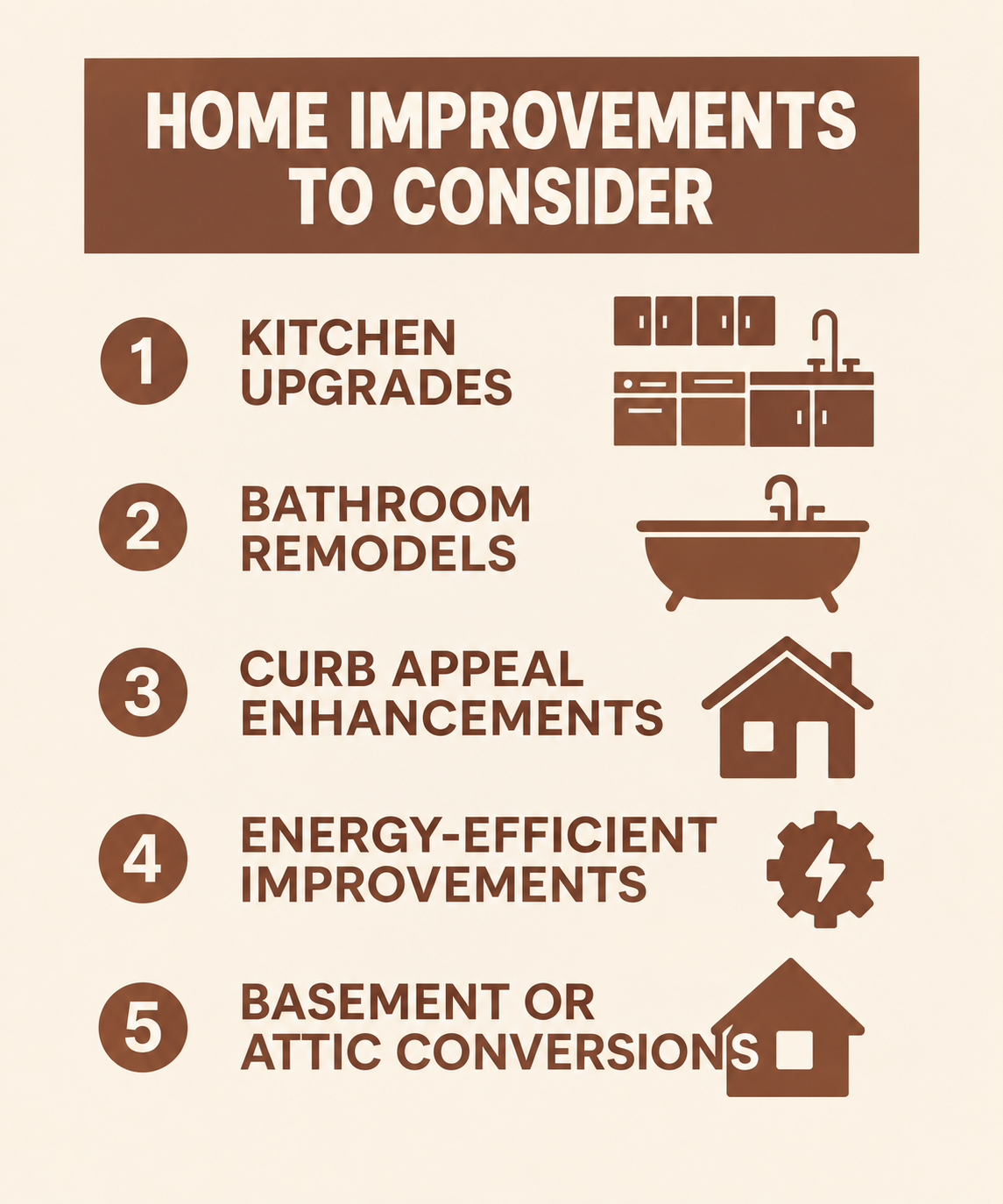
Home improvements compete for the same budget, but they do not solve the same problem. A leaking roof, a cramped kitchen and dated paint deserve different decisions. Start with what the house needs, then consider how you use it and whether a move is approaching. A project can be worthwhile without producing a dollar-for-dollar increase in resale value.
Separate repairs from upgrades
A repair restores something that is damaged or not working properly. An upgrade changes the home beyond its existing condition. Put active leaks, unsafe components and failing essential systems on a separate list from finish selections.
This distinction helps you compare choices honestly. Replacing a damaged floor may be necessary; changing an intact floor because you prefer another style is discretionary. Both can matter, but the urgency and financing decision are different.
Use a practical order for home improvements
- Address safety and active damage with the appropriate professional.
- Protect the building from water and weather.
- Restore reliable heating, cooling, plumbing and electrical function.
- Improve daily use, accessibility or a persistent comfort problem.
- Choose cosmetic changes that fit the remaining budget and your plans.
Work can overlap. If a wall must be opened for a needed repair, it may be efficient to coordinate other appropriate work at the same time. Get the scope and permit requirements settled before adding tasks informally.
Match the project to your ownership plans
If you expect to stay, consider the benefit you will use: a safer entry, workable storage, an accessible bathroom or a room that supports daily life. Write down the specific frustration the project should resolve. That keeps attractive extras from taking over the budget.
If selling is closer, ask for a property-specific preparation review before a major remodel. Buyers compare condition, layout, location and price together. A premium finish does not automatically offset an unresolved foundation or moisture concern. No universal return percentage can predict the result for your house.
Compare written scopes, not just the total
The FTC’s contractor guidance recommends checking contractors and getting written estimates. Ask each bidder to price the same work so differences are visible.
- What preparation, demolition and disposal are included?
- Who checks permits and inspections, and who obtains them?
- Which materials, finishes and allowances are specified?
- How are hidden conditions and change orders priced and approved?
- What are the payment schedule, start assumptions and warranty terms?
Check applicable credentials and insurance with the relevant authority or provider. A referral is a useful starting point, not a substitute for reviewing the contractor and agreement yourself.
Plan the full disruption and cost
The contractor’s price may not cover every household expense. Think about temporary arrangements, storage, delivery access, pets, cleanup and rooms you cannot use. Ask how delays or material substitutions will be handled.
Keep a reserve for unresolved conditions rather than committing every available dollar to the visible finish. Its size should reflect the specific project and the uncertainty in the scope; there is no single percentage that fits every home.
Before borrowing, compare the total repayment obligation with the project’s purpose. A lower monthly payment can hide a longer term or variable-rate exposure. Do not justify the loan solely by an assumed future sale price.
Use a short project decision sheet
- Problem to solve: describe it in one sentence.
- Evidence: inspection findings, photos or repeated day-to-day problems.
- Options: repair, replace, redesign or defer.
- Cost: comparable written proposals plus related expenses.
- Timing: urgent, seasonal or flexible.
- Success: what should be different when the work is finished?
Take that sheet into a contractor conversation and, if a sale is likely, a conversation with Austin. It makes the discussion specific to the property instead of a generic list of trendy upgrades.
Frequently asked questions
Which renovation always adds value?
No renovation guarantees a particular resale return. Condition, workmanship, local alternatives and the eventual sale market all affect the result.
Should I remodel before listing?
Get a preparation review first. Sometimes completing repairs and improving presentation is more appropriate than starting a large project immediately before a sale.
Related guidance
- Seasonal Home Maintenance Checklist for Missouri Homeowners
- Using a HELOC for Home Improvements or an Investment Property
- Homeowners Insurance: Coverage, Deductibles and Renewal Questions
Have a question about a property or your next step? Contact Austin Moore Group or explore the Knowledge Hub.