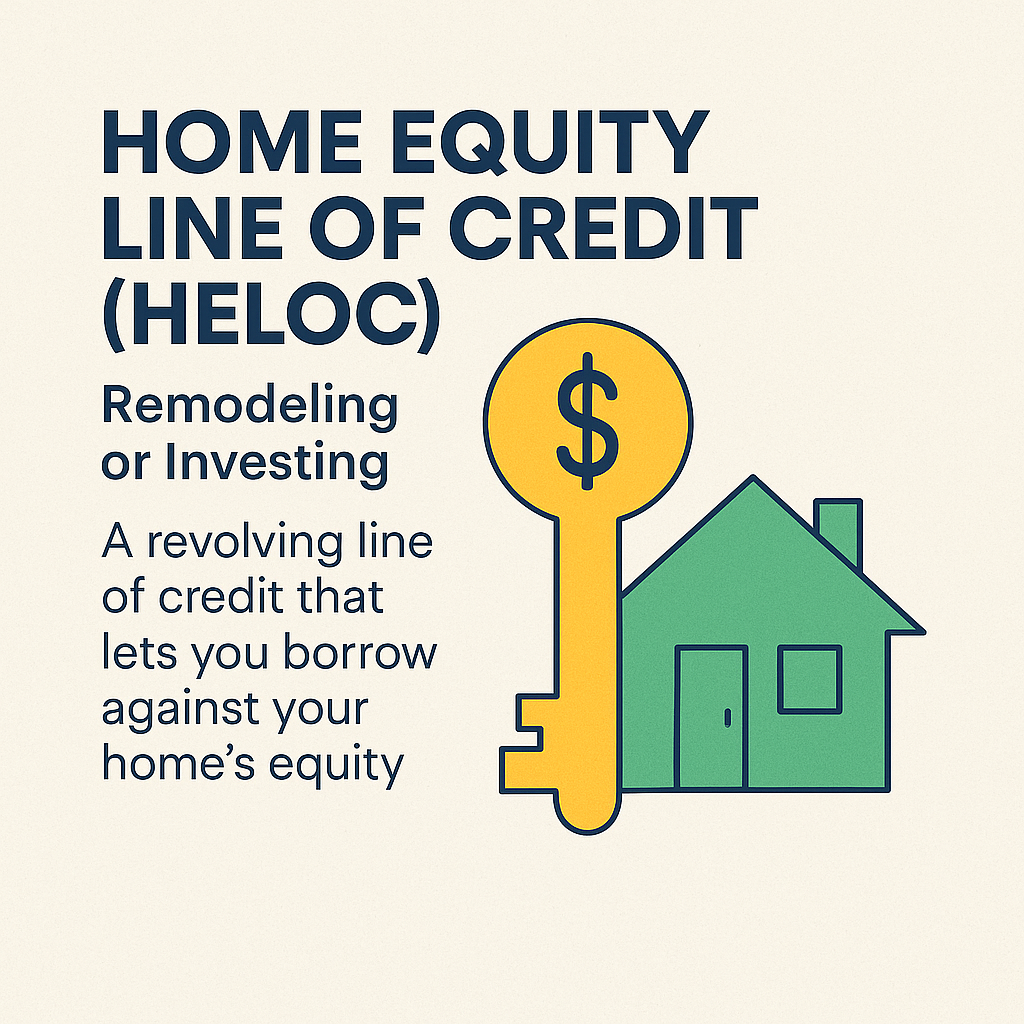
A HELOC, or home equity line of credit, lets an eligible homeowner borrow against available home equity under a lender’s terms. It can be considered for a renovation or another purpose, but available credit is still debt secured by the home. Evaluate the repayment plan before treating the line as a project budget or an investment opportunity.
Understand how the line works
A HELOC commonly has a draw period when borrowing is available and a later repayment period. Payment requirements, rates and access rules depend on the agreement. The Consumer Financial Protection Bureau’s HELOC explanation describes these features and the risk to the home if repayment fails.
Do not assume an interest-only payment during one stage describes the long-term obligation. Ask the lender for a written explanation of payment changes, the index and margin if the rate varies, and any limits on future increases.
Match borrowing to a defined project
For improvements, begin with a documented scope and comparable contractor proposals. Identify required work, optional upgrades and unresolved conditions. Borrowing capacity should not decide how elaborate the project becomes.
Coordinate the proposed draw schedule with the contractor’s payment schedule. Know how you would pay if costs rise, work pauses or the lender reduces access to the line. Avoid committing all available household reserves to both the project and its financing.
Also compare alternatives such as phased work, savings or another loan structure. Compare fees, total repayment and collateral exposure rather than only the first monthly payment.
Using a HELOC for an investment adds another layer
When home equity helps fund a rental or flip, the investment’s setbacks can affect the home securing the line. Vacancy, repairs or a delayed resale may arrive while the HELOC payment is still due. The new property does not need to perform poorly for long to create a cash-demand problem.
Build a separate budget for the investment and show the HELOC obligation clearly. Do not count the same reserve as both your household emergency fund and the rental’s repair fund. Ask the lenders about permitted use of proceeds and how additional debt affects financing qualification.
Have a plan that does not depend on immediate appreciation, an easy refinance or selling on an exact date. If the plan works only when every assumption is favorable, revisit the size or timing of the transaction.
Ask the lender these questions
- What fees apply to opening, using, maintaining or closing the line?
- Is the rate variable, fixed or convertible, and how does each option work?
- What are the draw-period and repayment-period payment requirements?
- Could a balloon payment or other large obligation occur?
- Under what conditions could available credit be frozen or reduced?
- Are there minimum draws, early-closure charges or use restrictions?
- What happens if the property is sold or the first mortgage refinanced?
Request illustrations tied to the actual proposed terms, including a less favorable rate or payment scenario. These should come from the lender, not a generic online promise of low-cost financing.
Check tax treatment separately
Do not assume interest is deductible because a loan is secured by a home or used for real estate. Treatment can depend on how proceeds are used and your circumstances. Keep records tracing draws and expenses, and ask a qualified tax adviser to review the plan.
The IRS rental property publication provides general rental-tax information, but it does not replace analysis of your specific borrowing and ownership structure.
Make the decision with a repayment plan in hand
Write down the purpose, expected draws, payment assumptions, reserve needs and intended repayment source. Then describe what you would do if the project took longer or the investment produced less cash than expected.
Austin can help you evaluate the property side of an investment or improvement decision and identify questions for the right professionals. A lender determines available loan terms; tax and legal advisers address those parts of the plan. A HELOC should support a workable decision, not make an otherwise unaffordable one appear affordable.
Frequently asked questions
Is a HELOC the same as cash savings?
No. It is borrowed money with contractual terms, repayment obligations and collateral risk. Access can also change under the agreement.
Can future rental income be my only repayment plan?
That leaves you exposed to vacancy and other interruptions. Review the full obligation and backup resources with your lender and financial adviser before committing.
Related guidance
- Which Home Improvements Should You Prioritize?
- How to Evaluate Your First Rental Property
- Hard Money Loans for Real Estate Investors: Costs and Risks
Have a question about a property or your next step? Contact Austin Moore Group or explore the Knowledge Hub.